
Common Men's Leather Jacket Buying Mistakes & How to Avoid Them

Buying a quality leather jacket should feel like an investment, not a gamble. Yet every year, countless men walk into shops, browse online, and make purchases they regret within months. The problem is simple: they're not aware of the common leather jacket buying mistakes that trip up even seasoned shoppers. Whether you're investing $300 or $3,000, knowing what to avoid can save you serious money, precious time, and your closet from regret.
A leather jacket isn't just another piece of clothing sitting in your wardrobe. It's supposed to last years, develop genuine character, and actually look better as it ages. But that only happens when you buy the right one. Most leather jacket buying mistakes are completely preventable once you know exactly what to look for, and that's what this comprehensive guide covers in detail.
Why Most Men Fail at Buying the Leather Jacket?
Most men buy leather jackets without doing any real research. They see something that looks cool, feel somewhat comfortable in the store, and boom, it's heading to checkout. This is mistake number one, and it cascades directly into everything that follows.
The most common leather jacket buying mistakes can be categorized into distinct areas. There's the material issue, not understanding leather jacket quality grades and what actually separates genuine leather from synthetic imitation. There's the fit problem, grabbing the wrong size or style without considering how your body type works with different cuts. There's the durability trap, buying from unknown sellers and hoping results magically improve. And then there's the care factor, having no idea how to maintain your jacket once it's yours.
Smart buyers do not take impulsive decisions. They know what to look for in real leather. Most importantly, they understand that this purchase requires genuine thought and planning upfront.
If you're exploring different leather jacket styles, you might also consider alternatives like men's Varsity Jackets, which offer a different aesthetic while maintaining similar durability considerations and material standards.
How to Identify Real Leather and Craftsmanship
This is where most mistakes happen, and honestly, it's where sellers count on your confusion about materials and grades.
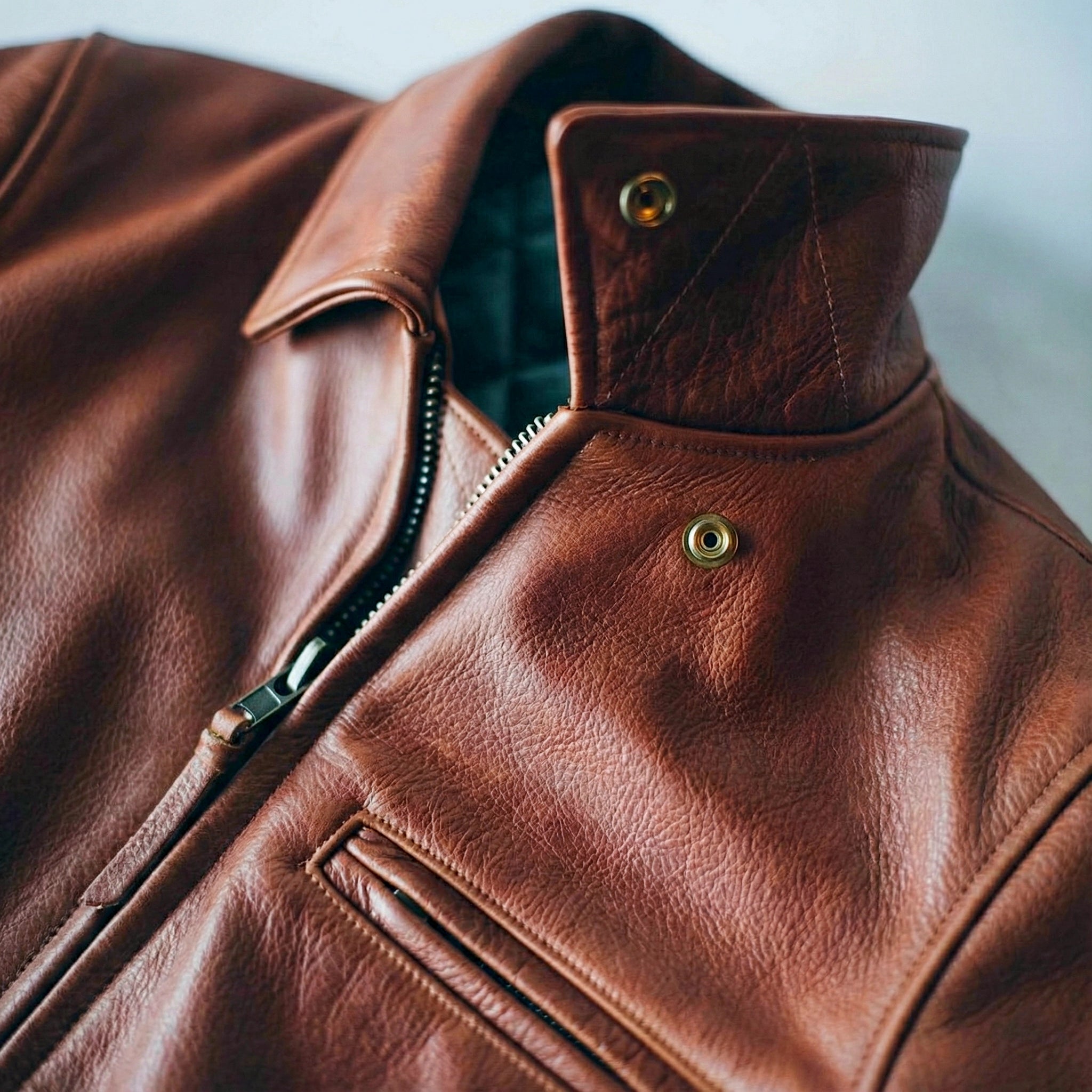
Not all leather is created equal, and understanding the quality grades of leather jackets is absolutely critical for making informed decisions. Full-grain leather is the gold standard. It's the top layer of the hide with all the natural markings and grain intact. It ages beautifully, develops authentic patina over the years, and genuinely lasts decades with proper care and conditioning. Top-grain leather is also a legitimate quality, but it's been sanded down slightly, removing some of the natural character that makes leather special and unique.
Split leather and bonded leather? These are basically scraps glued together with industrial adhesive. They feel nothing like real leather and fall apart within a year or two of regular wear. When examining a jacket in person, feel it carefully with your hands. Run your palms over it deliberately. Real leather has genuine weight and character that's unmistakable to the touch. It doesn't feel plasticky or slippery like synthetic imitations do. If the tag says "genuine leather" but it feels like a cheap knockoff, that's because it probably is. The term genuine leather is broad because it simply means there's some amount of leather present, not that it's quality material.
The construction matters just as much as the leather itself, and sometimes more. Check the stitching carefully and thoroughly throughout. Are the seams straight and even? Do they look like they'll hold up under regular use, or do they look hastily done without proper care? Are the zippers solid and smooth, or do they stick and feel cheap in your hand? Real leather jackets from trusted leather jacket brands have reinforced stress points at the shoulders, underarms, and collar. That's where jackets fail first, if they're poorly made by cutting corners on construction.
For comparison, think about how men's Aviator Jackets are constructed. They require serious structural integrity due to their specific design requirements, and quality leather jackets demand the same level of attention to construction details and durability standards.
Why Fits Matter More Than Brand In A Leather Jacket
A leather jacket that doesn't fit properly is worthless, no matter how nice the leather actually is underneath or what brand it carries.
This is where understanding leather jacket style for men's body type becomes essential for purchasing success. Not every jacket works for every body shape, and that's a fact most buyers ignore entirely. A boxy cut might look fantastic on a tall, slim guy, but completely overwhelm someone stockier in build and frame. A fitted moto jacket can look sharp on a muscular frame, but feel restrictive and uncomfortable on someone broader in the shoulders and chest.
Here's what consistently trips people up repeatedly. They try on a jacket and convince themselves it fits because they like how it looks in the mirror. That's backwards thinking. A quality leather jacket should feel almost like a second skin once it's broken in and softened. It shouldn't be so tight you can't raise your arms comfortably to move, and it shouldn't be so loose it looks like you're wearing your dad's oversized coat from decades past.
Shoulder seams should sit right at the edge of your shoulder, not drooping down your arm, not riding up your neck. The sleeves should end just above your wrist when your arms are relaxed at your sides. The jacket should hit your hip, not your thigh. And when you button or zip it, there should be enough room to layer underneath without bunching or excessive pulling.
The thing about leather is that it stretches slightly as you wear it regularly over time. It softens, molds to your body shape, and becomes increasingly more comfortable and personalized. This is actually a feature, not a bug or problem. But it means you need to account for this stretching when buying your jacket. If a jacket feels perfect right now, it might be too loose in a few weeks. If it's tight now, it might cut off your circulation for the next month while it breaks in properly.
Consider how different styles work with body shapes, similar to how men's Suede Jackets require different fit considerations than traditional leather alternatives due to their construction and material properties and flexibility.
Choose A TrustWorthy Leather Jacket Seller
Here's something that shocks people repeatedly: not all leather jacket sellers are actually legitimate or trustworthy.
Real leather jacket seller verification isn't hard, but it absolutely requires several minutes of genuine effort and research. Before you buy from anywhere, whether it's a small boutique, an independent retailer, or a major chain store, check their reputation thoroughly. Read reviews from actual customers who've purchased from them. Not just the glowing five-star ones, but the three and two-star reviews too. Those tell you what actually goes wrong when things don't work out perfectly.
Trusted leather jacket brands have real history, consistent quality, and genuine accountability. They stand behind their products without question. If something goes wrong, they'll make it right. Unknown sellers or fly-by-night operations? They don't care if your jacket falls apart in six months because you're not coming back anyway to bother them with complaints.
Look at the company's return policy, warranty coverage, and customer service responsiveness carefully. Can you actually reach them if a real problem occurs? Do they offer exchanges for sizing issues? How long does shipping actually take to your location? A legitimate seller is transparent about everything. They want you to feel confident in your purchase because they know their product is genuinely solid and will perform.
This doesn't mean you must buy from massive, well-known brands necessarily. There are smaller operations that make exceptional leather jackets and stand by their work completely. Just do the legwork upfront. Ask questions freely and extensively. See how they respond to your inquiry. A company that treats customer inquiries seriously before the sale is likely to treat you well after it's completed.
Keep a leather jacket checklist before buying that includes: leather type verification, construction quality checks, return policy review, brand reputation assessment, price comparison across multiple retailers, and fit confirmation before purchase.

Making a Leather Jacket Decision Without Research: Why This Fails
Impulse buying is the enemy of smart purchases, especially when it comes to significant leather jacket investments.
Taking time to research before you buy is the difference between owning a jacket you love for ten years and storing a regret in your closet. Create a leather jacket checklist before buying, write it down if you have to. What's your budget realistically? What color do you actually wear in daily life? Do you prefer a classic look or something edgier? What's your lifestyle? Are you riding a motorcycle, or just trying to look cool at social events?
Then, research specific jackets that fit your criteria. Look at multiple photos from different angles. Read customer reviews thoroughly. Compare prices across retailers carefully. Check out similar styles. This shouldn't take days, but it shouldn't be thirty seconds either.
Pay attention to details like pocket placement, hardware quality, leather thickness, and overall construction. Ask the seller questions, lots of them. A good seller will answer everything you throw at them. A bad one will get impatient or vague quickly.
One thing many guys overlook is trying on jackets in person before buying online. If you can, do it. If you can't understand the return policy thoroughly. Some places charge restocking fees. Others have strict return windows. You want to buy from someone who makes returns easy because you might need to exchange it for a different size or style.
Ignoring Leather Care and Maintenance
This mistake happens after you buy the jacket, but it's just as critical as getting the right one in the first place.
Once you own a quality leather jacket, you have to treat it consistently. Real leather needs conditioning regularly. Over time, especially if you wear it regularly, it can dry out and crack. Conditioning it every six months or so keeps it supple and extends its life significantly over the years.
Clean it regularly with a soft cloth. Don't throw it in the washing machine; that's a rookie move that ruins jackets fast. If it gets wet, let it air dry away from direct heat. Never put it near a radiator or use a hair dryer. And if you spill something on it, clean it up quickly with a damp cloth.
This isn't complicated stuff, but it matters enormously. A $1,500 jacket that you neglect will deteriorate faster than a $500 jacket that you care for properly.
Color and Style Choices That Don't Match Your Lifestyle
Black leather jackets are classics for a reason; they go with almost everything. But they're not the only option, and sometimes they're the wrong option.
Think about what you actually wear daily. If your everyday wardrobe is mostly earth tones and blues, a black jacket might feel like it doesn't fit with everything else. Brown or tan leather jackets are versatile and age beautifully. They're also more forgiving when it comes to wear marks and scratches.
Similarly, think about the style carefully. A sleek, minimal leather jacket works for some guys. Others want something with more hardware and attitude. A cropped biker-style jacket won't look right if you prefer looser, more relaxed fits. Compare your leather jacket style for men's body type with the styles available, and be honest about what actually suits you best.
If you're a dressy guy, consider how a leather jacket fits into your wardrobe. Will you actually wear it, or will it sit in your closet unused? If you ride a motorcycle, you might prioritize protection and durability over fashion trends. If you wear men's Hooded Jackets most of the time, a structured leather jacket might feel uncomfortable when you transition to it.
Not Checking the Details: Small Things Reveal Quality
Small things reveal quality instantly to trained eyes. Zippers should be smooth and substantial. They shouldn't get stuck or feel flimsy. The hardware, snaps, rivets, and D-rings should feel solid and well-attached, not like they'll pop off after a few months.
Look at the seam tape if it's visible on the interior. Good jackets have clean, professional seam finishing throughout. The lining should be stitched neatly and shouldn't bunch or wrinkle excessively. Pockets should be reinforced properly.
These details sound minor, but they're the difference between a jacket made with care and one just churned out as quickly as possible. Brands that care about their product show it in these little things.
Not Understanding What You're Paying For: Value vs. Price
Price isn't everything, but it's nothing either in this market.
A $200 leather jacket from a department store is different from a $1,500 jacket from a heritage brand. The difference isn't always visible at first glance, but it shows up over time. Better leather, better construction, better hardware, better customer service, these things cost money to provide.
That said, expensive doesn't always mean good. You can overpay for a name. Do your research. Compare what you're getting for your money. Sometimes that mid-range jacket from a solid brand offers better value than either a cheap option or a luxury option.
Set a realistic budget and understand what that gets you in the current market. Then stick to it.
Making the Smart Choice: Your Action Plan Forward
The good news about leather jacket buying mistakes is that you don't have to make them. Thousands of men before you have, and they've documented what went wrong. Learn from that collective experience.
Before you buy, understand leather jacket quality grades and material specifications. Know your size and fit requirements. Research trusted leather jacket brands carefully. Create a leather jacket checklist before buying. Think about color and style relative to your actual life. Check the details carefully. And understand what you're paying for.
When you do this work upfront, you end up with a jacket you actually love wearing. It lasts for years and improves with age. It develops character and patina. Every time you put it on, you're genuinely glad you made that purchase.